

Last updated: Aug 19, 2026
If you've been posting on TikTok for months and your follower count looks fine, but your bank account doesn't, you're not alone. This is the most common complaint from business owners and creators who try TikTok: the views and likes come in, and then nothing converts. Most advice on this topic stops at "post consistently and be authentic." That's not wrong exactly; it's just incomplete. Posting consistently helps you build an authentic audience, but if you want to turn them into customers, you need a strategy that goes beyond simply showing up and posting.
Getting attention and turning it into customers are two different things, and they require different strategies. This blog walks through the actual sequence, from figuring out whether TikTok even fits your offer to setting up a profile that does more than look nice. You will discover 7 smart steps to get more customers on TikTok, and also learn about common mistakes that drag down your strategy and overall customer acquisition.
Getting paying TikTok customers on the app isn’t built on one trick; it's seven moves done in the right order. Know precisely who buys from you. Build a profile that converts instead of one that just looks nice. Post in a mix that earns trust before you ever ask for money. Set up an actual path from video to sale instead of hoping people find their own way. Back it with proof that's real.
Add paid spend only once something is already working without it. Then watch the handful of numbers that actually predict revenue, and ignore the rest. Skip a step or do them out of order and you end up with what most accounts have at last: solid view counts and an empty inbox. Each part below builds on the last one, so read it in order rather than jumping around. Start with the part almost everyone gets wrong first: who they're actually talking to.
"Find your niche" is advice you've heard a hundred times, but to get TikTok customers, it's mostly useless without a second layer: buyer intent. Here's the distinction that will build a foundation to get leads on TikTok. The platform is full of people who will watch a video about your topic. Before you build content, get specific about three things:
Who is this for — it can be anyone from small business owners to a solo real estate agent or a fitness creator who just got their license and doesn't have a client list yet.
What problem are they trying to solve right now — figure out what they are actually suffering from and try to put it as a priority. Turn followers into customers by giving them a clear reason to trust your brand.
What have they already tried — because that tells you what objections you'll need to handle, so make sure you listen to what they tried and what they’re looking forward to.
This is where most guides say "add a link in your bio" and move on. But let me tell you, that's simply not enough. Your profile is the bridge between a stranger scrolling and a person handing over money, and most businesses build a rickety one.
Get a business account. As of 2026, TikTok Business accounts unlock analytics, the ability to add a website link regardless of TikTok follower count, and access to sell products. There's no real downside to switching.
Write your bio like a landing page headline, not a personality bio. Skip "coffee lover, dog mom, entrepreneur." Instead: who you help and the transformation you offer, in under 80 characters. For example: "Helping new agents book their first 5 clients in 90 days."
Use your profile photo and pinned video strategically. Your pinned video should be your best proof piece. It should highlight a result, a transformation, a testimonial, not your most viral or funniest video. People who land on your profile after one good video will watch the pinned video next. Your job is to turn it into something that sells.
Where competitors miss out: the link in your bio. Sending traffic to your generic homepage is a leak in the funnel. Whoever clicks that link just watched a specific video about a specific problem; your landing page needs to match that specific promise, not a general welcome page. A landing page that mirrors the exact hook from the video converts noticeably better because there's no gap between what they clicked expecting and what they see.
The mistake most businesses and creators make is either treating every video as a chance to increase sales, or never treating any video as one. But in the end, neither of them ultimately works. What works is a deliberate ratio. Let’s understand it with the help of a structure that holds up well across niches:
70% value and proof — teach something useful, show results, answer a common question your buyer has. This builds a strong impression that this person knows what he’s doing.
20% trust-building — behind-the-scenes, your story, why you do this work, day-in-the-life content. This will make the customer feel comfortable buying from you.
10% direct offer — straightforward "here's what I sell and how to get it" content.
Why this ratio, and not something more sales-heavy? Well, TikTok's algorithm rewards watch time, completion rate, and shares. These are the signals that come from content people actually want to watch, not content that feels like an ad. If your feed is mostly pitches, the algorithm shows it to fewer people, and the people it does show it to scroll past. Value-first content earns the distribution that eventually carries your content to new TikTok Followers.
Think of the customer journey as four checkpoints: video → profile → landing page or DM → close. Each one has a specific job, and each one is where people drop off if you don't design for it.
Video to profile: the video's job is curiosity plus enough proof to make someone tap your profile. End videos with a reason to check your profile, rather than a generic ending.
Profile to landing page or DM: once someone's on your profile, they decide in seconds whether to go further. This is why the bio and pinned video from Step 2 matter so much.
Landing page or DM to close: this is where the actual offer, price, and next step need to be crystal clear. If you're using TikTok Shop to sell products, the checkout happens in-app, which reduces friction but also means your product listing and reviews need to carry the trust load your landing page would otherwise carry.
That in-app checkout is a real edge, too. TikTok Shop's average conversion rate sits at 3.2%, well above what most standalone ecommerce sites see. But that number only holds up if your listing and reviews do the trust-building your landing page normally would, so be mindful of it.
Social proof works because people trust other people's experiences more than they trust your claims about yourself. But it backfires when it's obviously staged or overused. What holds up:
Specific testimonials over vague ones: Something specific like "Booked out 3 weeks after this video" beats "Great service, highly recommend!"
Screen-recorded reactions: Show a DM conversation (with permission) where a client describes their result.
Live streams for real-time proof: TikTok LIVE lets you answer questions, show your work, and close smaller offers in a format that feels like a conversation instead of a pitch. It also tends to get algorithmic support because it drives watch time.
Organic content should always come first and be unique. It's how you learn which hooks, offers, and formats actually resonate before you pay to amplify anything. Once you have a video that's converting organically, meaning it's already driving profile visits or DMs without ad spend, that's your signal to start adding paid spend.
Spark Ads let you boost an existing organic post using its real engagement and comments, which tends to perform better than a cold-made ad because it retains social proof. In-Feed Ads are built specifically as ads and give you more targeting control but start with zero social proof.
Start with a small daily budget, enough to gather meaningful data but not enough to hurt if it doesn't work. Run a test for at least three to five days before judging results, as TikTok's ad delivery needs time to optimize. Be honest that this step involves genuine trial and error. We all know that nobody gets the first ad right, and that’s totally okay. But if someone says they did, they probably skipped the part where they spent a few hundred dollars figuring out what didn’t work.
TikTok views and likes feel good, but they don't tell you whether you're making money. The metrics that actually predict paying customers are further down the funnel: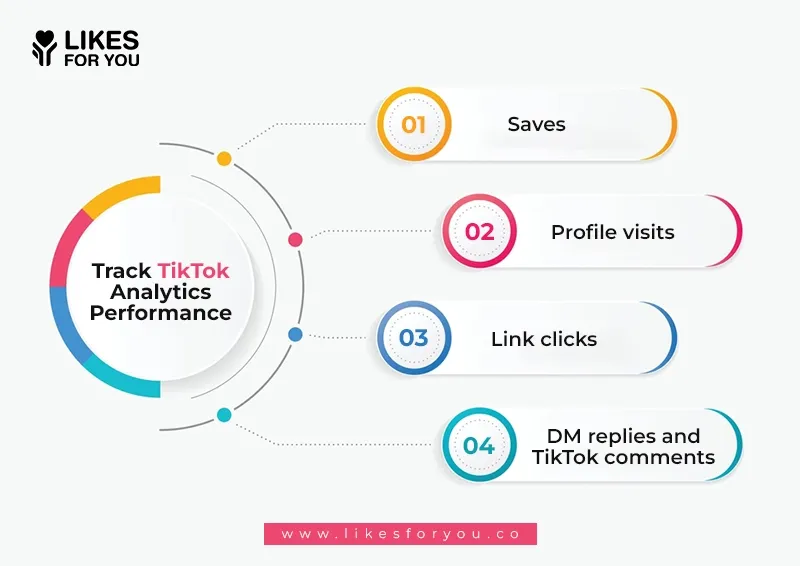
Saves — a strong signal someone found real value and might come back or share it.
Profile visits — shows the video is generating curiosity beyond a passive watch.
Link clicks — direct evidence someone is moving toward your offer.
DM replies and TikTok comments — the clearest sign of buying intent you'll get from TikTok.
Check these weekly, as day-to-day fluctuation is mostly meaningless. Look for patterns across five to ten videos, not conclusions from one.
Let's have a quick look at what we think we're doing right but is actually a red flag:
Avoid sending every video viewer to the same generic link. Match the destination to the promise made in the video.
Never pitch too early, before any trust has been built. If your first few videos to a new audience are direct offers, you're asking for a sale from strangers.
Do not ignore a single TikTok comment, as it is where buying intent lies first, often before a DM or click. A slow or missing reply loses momentum.
Stop treating TikTok Shop as the only path. Shop works well for physical products with strong visuals; it's a weaker fit for services, where a conversation or consult usually needs to happen first.
Try not to change the strategy every week based on one video's performance. Consistency in testing matters more than reacting to every up and down.
Summing it up, to get paying customers, you must know who's actually buying. Build a profile that does real work instead of just sitting there. Post in a ratio that earns trust before it asks for anything. Set up a path with clear checkpoints instead of hoping people find their own way through. Something you can do today is open your profile right now and ask whether your bio and pinned video would make a stranger who just watched one good video want to go further. If the honest answer is no, fix that first. It's a five-minute change, and it affects every single video you post from here on. Good luck with it!
Use clear English, follow trends that work across countries, and create content around topics people in your target markets are already searching for.
You can make money through TikTok’s creator programs, brand deals, affiliate marketing, TikTok Shop, or by using your audience to sell your own products or services.
Post content that solves real problems, show what you offer, and give viewers an easy next step, such as messaging you, booking a call, or visiting your website.
Views don’t always mean buying intent, so if your content attracts the wrong people or doesn’t clearly connect to your offer, you can get plenty of views without making a sale.
Table of Content

Jordan Calloway
Jordan Calloway is a social media growth strategist with seven years of expertise in TikTok content optimization, monetization, and algorithmic research. Having worked directly with brands and independent creators across the USA and UK, Jordan focuses on strategies that produce measurable results, not vanity metrics. This page reflects both platform research and real-world testing from working inside active TikTok growth campaigns.
In 2026, not every post on TikTok is a video anymore. Sometimes, a good TikTok text post can make a...
You’re not going crazy because your follower count hasn’t increased during the past year...
You go live on TikTok. Fifteen minutes pass, and the viewer count is still stuck at 2. So you do wha...
Want to grow on TikTok but don't know how? LikesForYou will help you to give your TikTok the glow it deserves.

NOW ENJOY DISCOUNT ON EVERY PURCHASE
